
The Odyssey Book 1
Viking Saga Style

The wanderer wept,
 his wisdom deep,
far from the fields
 of fallen Troy.
By many a mind
 his memory was kept.
Long were the leagues
 on lonely seas.

His fellows fell,
 folly their end:
the oxen they ate
 of ancient Helios.
The Sun-god's sorrow
 stilled the voyage.
None but the navigator
 now escaped.

Calypso's captive
 in cave and bed,
hidden in halls
 of hollow stone,
long he longed
 for land and home;
wanton she wished
 he would always stay.

Of high and hoary
 honored gods,
Athena asked
 Odysseus' rights.
"Pity the pauper,
 plagued by storms,
held in the heart
 of hollow seas."

The earth-shaker's ire,
 was endlessly deep:
for eye he'd extinguished,
 for ancient pain.
The cyclops cried,
 cruel the blow;
Poseidon planned
 a perilous road.
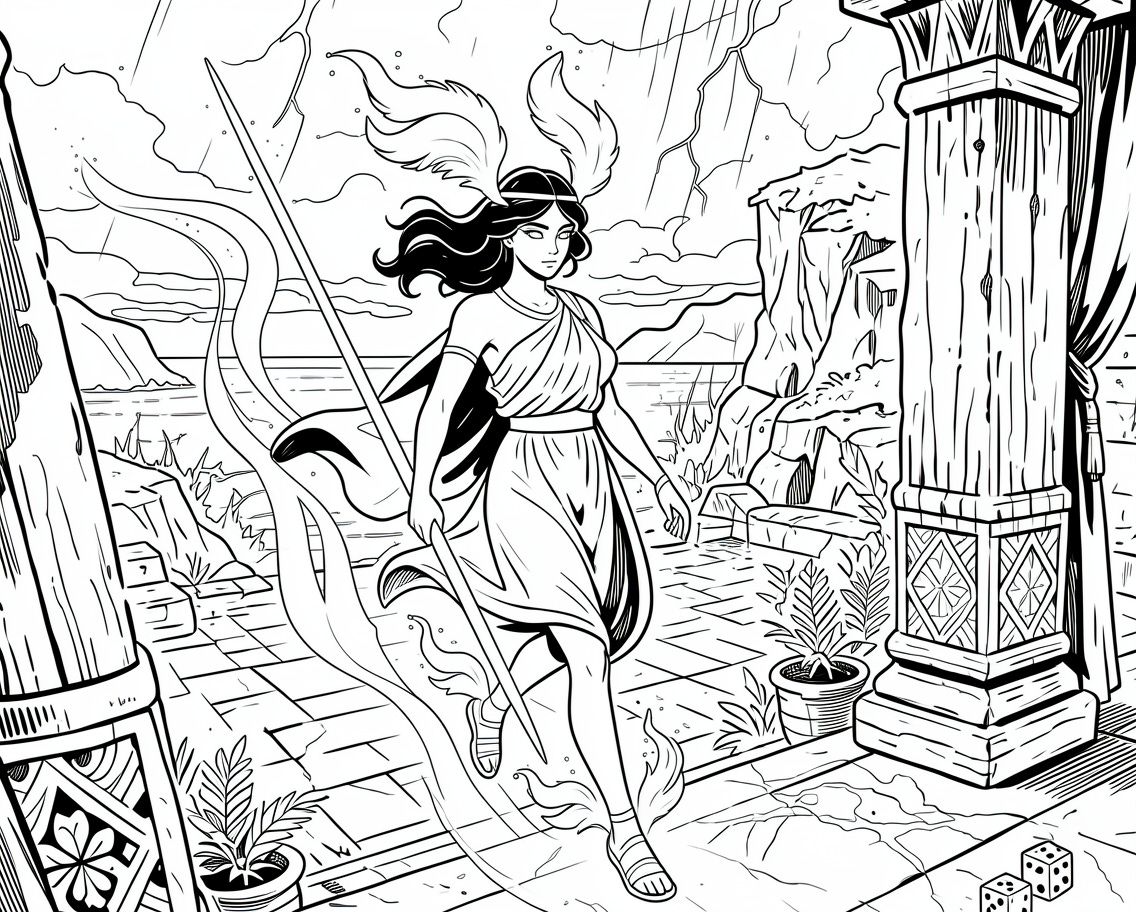
On isle of Ithaca,
 across the sea,
she found the fold
 of fallen hope.
The greedy guests,
 gold-hungry men,
wasted the wealth
 of the wandering king.

Telemachus toiled,
 tearful and young.
Athena advised
 the answer's way:
sail to Sparta,
 seek the truth;
ask of old wisdom,
 ask of the kings.
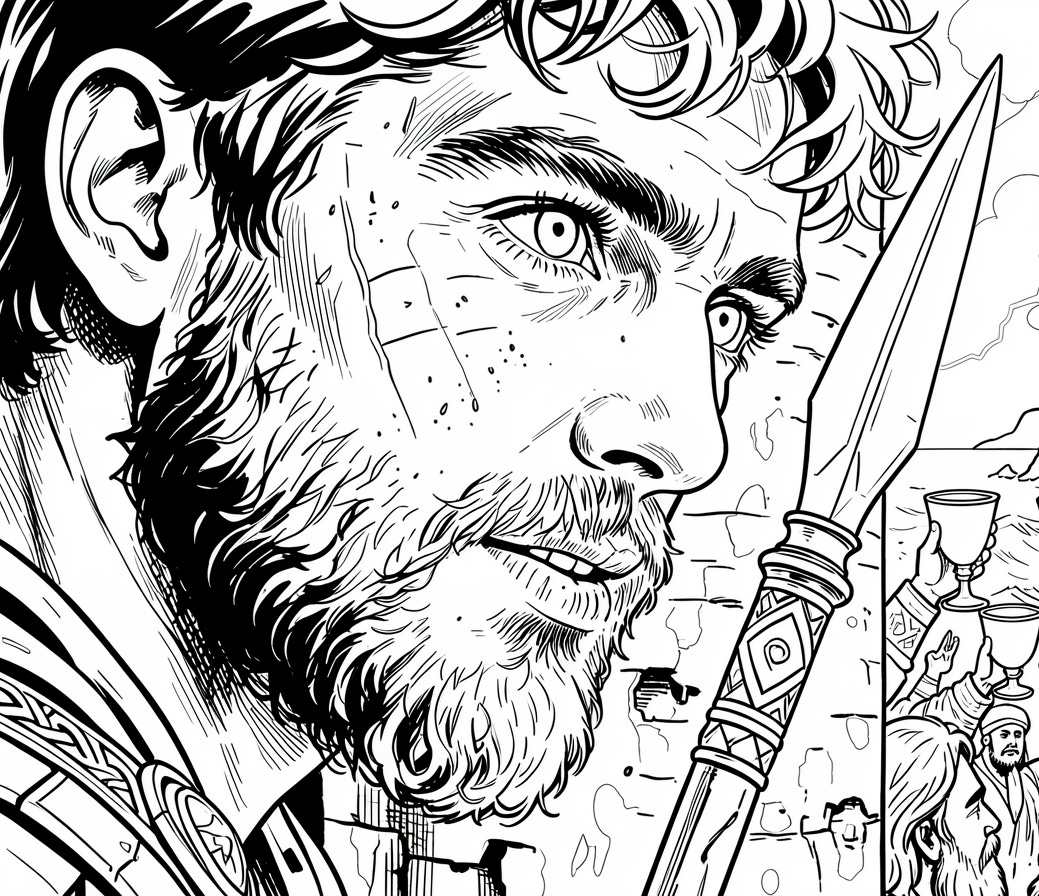
Strong he stood now,
 starting his speech;
he warned the wolves
 to withdraw fast.
The king would come,
 cold be the end.
The gods would give
 a grim reward.

Night fell near,
 noble the sleep.
The youth now yearned
 a young one's heart:
deep in the dark,
 dreaming of father;
waking, awaiting
 the wanderer's return.

Book 1 Synopsis
Odysseus weeps for home, trapped in Calypso’s island cave as her unwilling bedmate. His shipmates are lost, unwisely having eaten the cattle of Helios, and Poseidon, angry at Odysseus’ blinding of his son, the cyclops Polyphemus, bars his way through the ocean. Athena asks the gods on Olympus to grant him reprieve, then goes to his home in Ithaca, finding suitors who seek to marry his wife Penelope devouring his home and wealth with nightly carousing, while his son Telemachus looks on in anger and sadness. She advises Telemachus to warn off the suitors, then go to Pylos and Sparta to seek news of his father from kings Nestor and Menelaus. Telemachus warns the suitors, then goes to sleep, dreaming of the path ahead and his father’s return.
Acknowledgement
Like many translations and adaptations, this one stands on the shoulders of giants, and thus I cannot take full credit. In addition to the Homeric Greek, I made use of many translations, man and machine, prose and poetic, as well as the Prose Edda, the Poetic Edda, and translations thereof including by Tolkien. From all this, I rolled my own.
I never realized how poignant a character Telemachus was until I began this adaptation. Tears came to my eyes as I wrote “deep in the dark, dreaming of father; waking, awaiting the wanderer’s return.”
Let me know what you think so far! How’d you like the art style? I’m considering using the black & white line drawing style for the book, but I’ll probably add a few more illustrations to this chapter for the final version—likely of the council of the gods, Odysseus weeping in the cave, and perhaps an establishing shot of Odysseus sailing in Viking attire.
You can almost hear it.