
The Odyssey Book 2
Viking Saga Style

As gold-fingered dawn
 glowing arose
The elders of Ithaca
 to assembly came.
"Why now wake you
 the warriors of Ithaca?
Since Odysseus sailed,
 in silence hall reigned."

"Great is my grief,"
 grimly the prince said,
"My fortune faded,
 with father lost.
Suitors sit in
 his son's palace,
Wasting our wealth
 with wine and feasting."

Antinous arrogant
 among the suitors:
"Blameless be the
 band of us.
Penelope promised
 our plight would end,
when wedding-shroud
 woven, then she'd pick.

"Her send henceforth,
 in hand of her father,
forced to find
 a further husband.
Until she's open
 and of us will marry,
waste your wealth
 we endlessly shall."

Telemachus now tall,
 his teeth bright and bared:
"Force her to finish
 while father yet lives?
Fear soon my father,
 for vengeance will come:
The gods groan at greed,
 go forth or they'll strike."
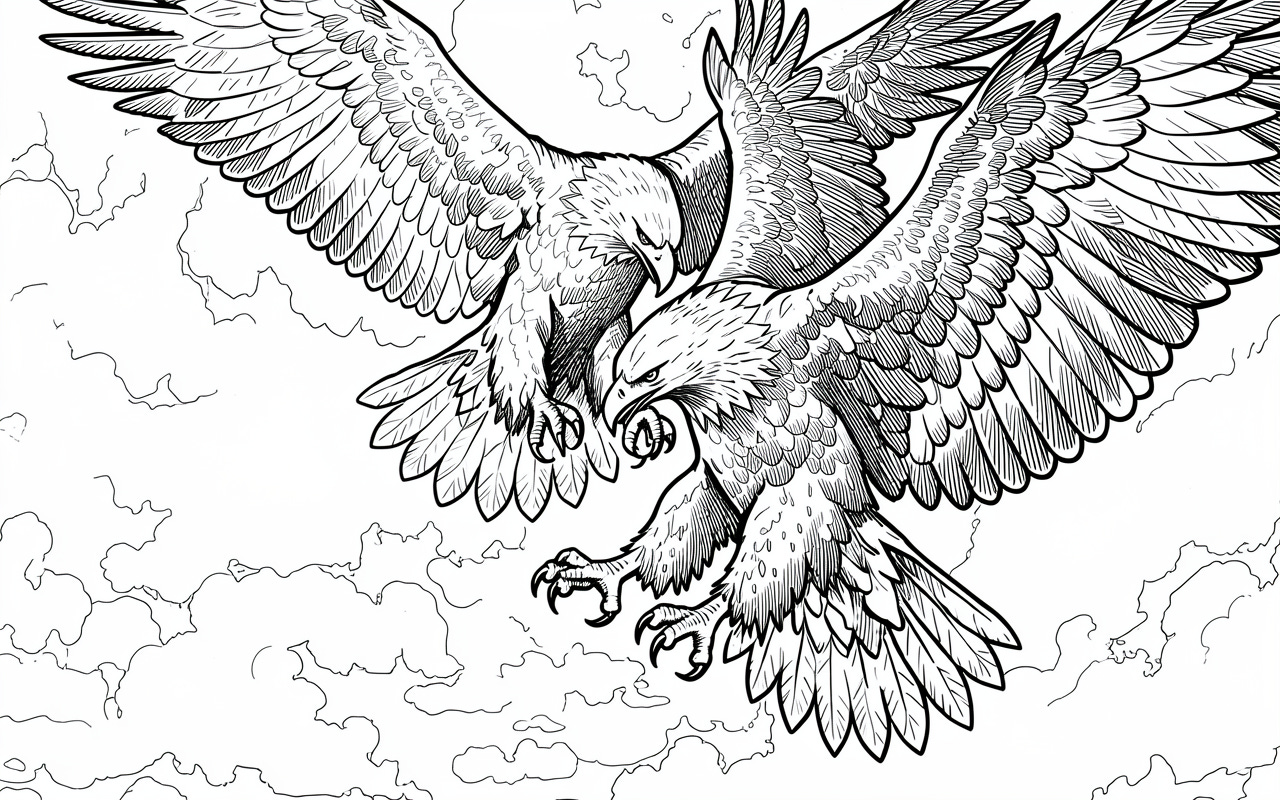
Eagles above,
 eyes keen-sighted,
two birds took to claw,
 together in flight.
The claws they clashed,
 cutting each other;
tore dead with talons,
 the taller the small.

"A portent of power,
 proving the warning!"
Sun shone on the seer,
 his saying the truth.
"Odysseus away,
 after two decades,
returns to right wrongs,
 reward suitors with death."

The suitors scoffed,
 the seer unheeded.
"We fear not your father,
 nor feigned omens.
Odysseus's away,
 in grave and no more.
His wife and wealth
 will one of us have."

The island's elders
 earnestly counselled:
"Too strong these stalwarts
 to stop from the plunder."
"Then give me a galley,
 good men for my crew,
to find if my father,
 fares still or is dead."

"If prince should perish
 in Poseidon's waves,"
(the suitors said,
 silently plotting,)
"then of Odysseus'
 all gold shall be ours.
And so we soon
 should seek his shipwreck:
let waves wind over
 his watery grave."

Now Athena aided him
 escape the suitors,
undone by ease
 of early sleep.
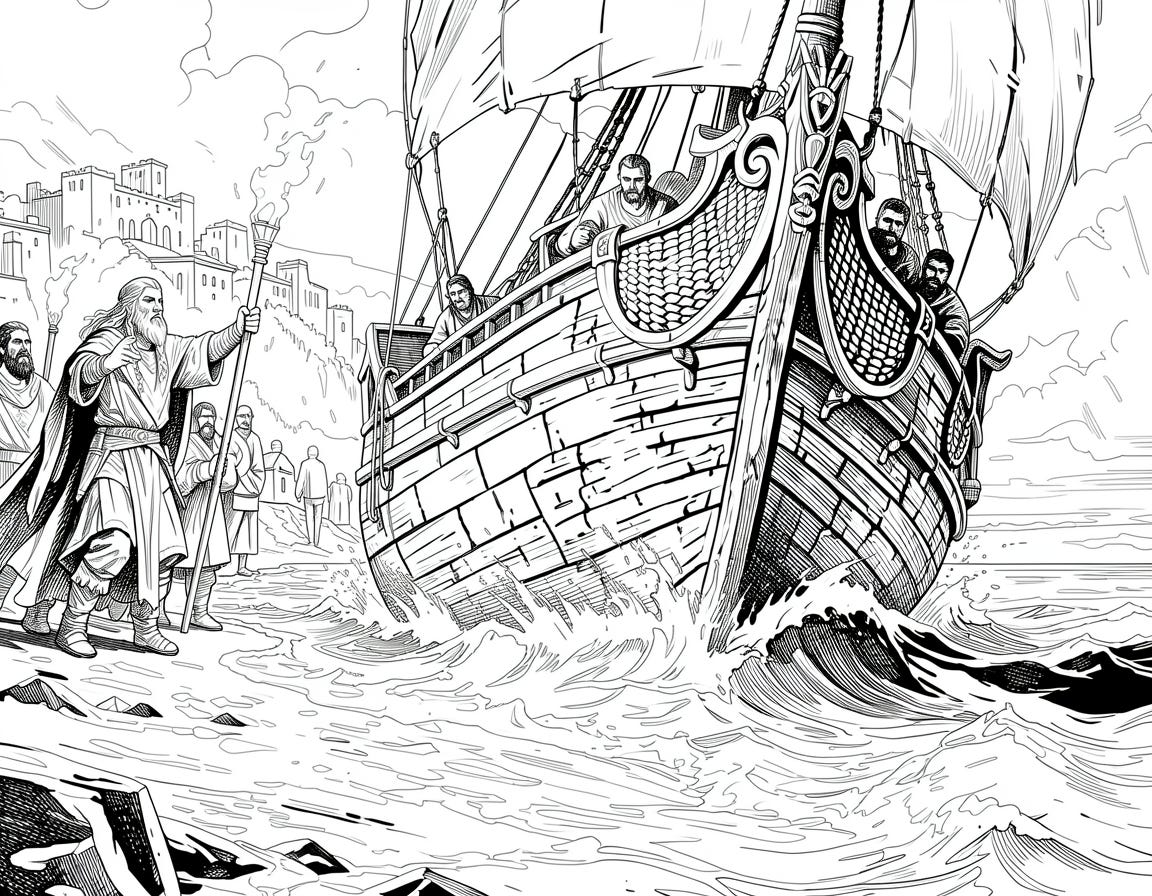
By night now prince
 neared ship and sail,
set forth so swift
 through salty waves.

Book 2 Synopsis
Telemachus calls the leaders of Ithaca to council, asking them to end the suitor’s predations. The suitors led by Antinous reject this plea, blaming Odysseus’ wife Penelope for not accepting one of them as husband, and instead endlessly stalling by various means, including delaying until after a weaving is finished, which she endlessly undoes, as well as pretending indecision on which one she prefers. They suggest forcing her to marry one of them by sending her back to her father’s house, thus declaring her unmarried, and promise to continue predating on his property until he does so.
Telemachus rejects this idea, as his father likely still lives, and calls to the gods for vengeance upon them. At this moment, two eagles are seen fighting overhead, one killing the other, and a seer interprets this as an omen of Odysseus’ imminent return, and the vengeance he will visit upon those wasting his wealth and attempting to force themselves on his wife.
The suitors scoff at this, and promise to continue feasting on Odysseus’ wealth until Penelope is forced to marry one of them. The council pleads inability to stop them, comprised as they are of some of the strongest young warriors of the island. Telemachus asks instead for a ship to seek news of his father, which is agreed to. The suitors plot to kill him during his voyage, but Athena puts them to sleep while Telemachus secretly stocks the ship and sets sail during the night, avoiding their first planned murder attempt.
Homer puts a lot of effort into making sure it’s clear that the suitors really, really deserve their coming grisly fate, for violating basic moral behavior in their greed, ignoring warnings, and ignoring the omens of the gods. He also shows Penelope making heroic efforts, via her feminine wiles, to delay men who clearly are willing to go as far as murdering her son to force their will. Making this come through in concise fornyrðislag verse is a challenge, but of course, the prose translations tend to do a bad job of this as well: the meaning of sending Penelope to her father is difficult to translate, and the reasons for Telemachus’ stealthy night-time sail don’t always come through. I, on the other hand, have the power of poetic license, and can just state this stuff outright as long as it’s with proper alliterative and metrical form.
I’m enjoying the line drawing style artwork still. I think I should add one more illustration to this chapter: Telemachus addressing the council, or the seer doing so. What do you think?
I just finished reading book one and two. Well done! I'm thoroughly enjoying your rendition. The alliterative verse is excellent. I look forward to the next installment!
Still solid going!