
The Odyssey Book 7
Viking Saga Style

The wanderer walked
 to walls of bronze
in grey mist gathered
 by goddess of war.
Pale-eyed Pallas
 played the maiden;
guided the guest
 through gated streets.
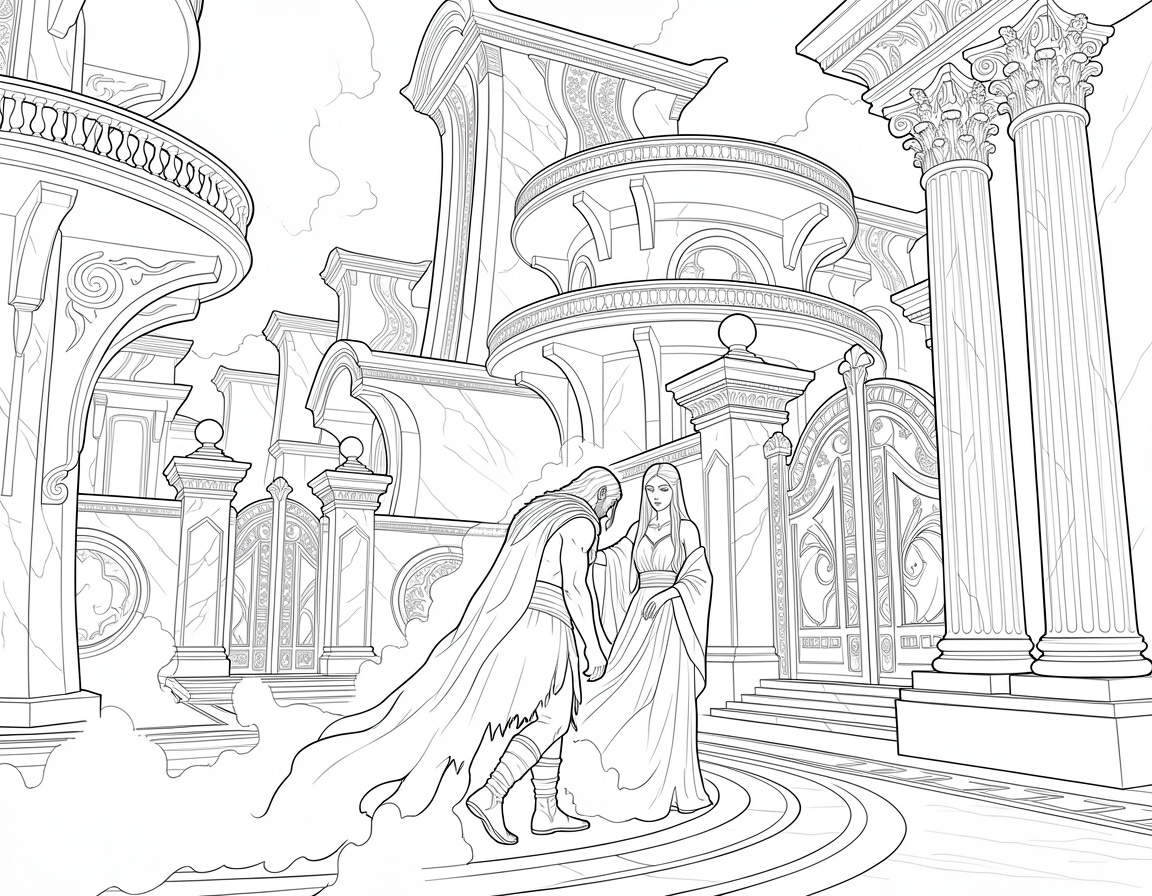
High stood the houses,
 hard and bright;
fruit never failing,
 fair and ripened;
ships in the shelter,
 shaped for the winds;
admired Odysseus
 all that he saw.

Gold-gleaming gates,
 glittering silver;
walls of white-bronze,
 wealth untold;
dogs divine,
 deathless wardens;
guarded the gates
 of great Alcinous.

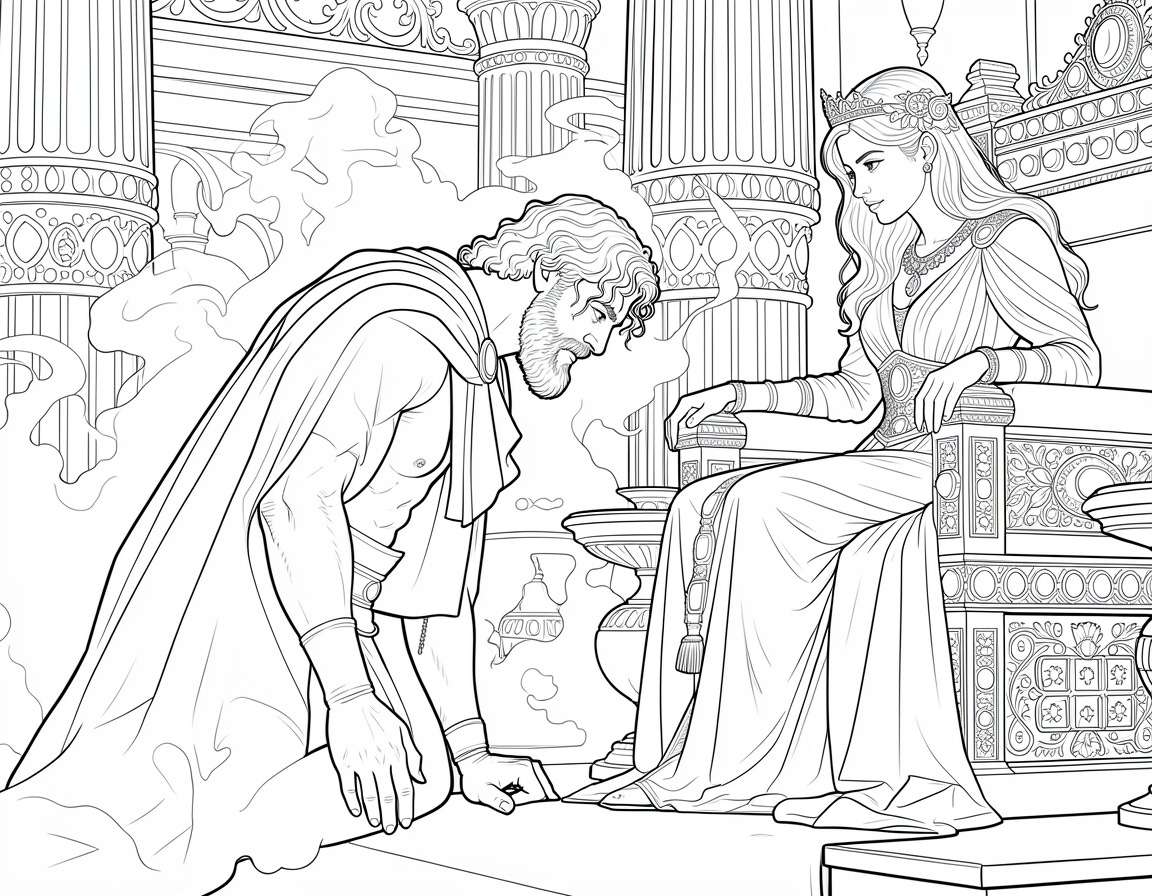
He fell at the feet
 of fair queen Arete,
then melted the mist;
 by magic sundered.
"Many the miseries
 this man endured;
grant him a galley
 to glide his way home!"
Alcinous answered,
 arose from his seat;
lifted the lowly
 from low in the ash.
He sat in splendor
 on silver chair;
wine for the wanderer,
 welcome of kings.

The cloak and cloth
 claimed by the stranger
the queen now questioned:
 "Quickly now tell me:
from where have you wandered?
 What are your clothes?
Who gave you those garments
 so gracefully fashioned?"

"On Ogygia isle
 alone, I landed.
Calypso kept me,
 captive, her love.
But bade by the gods,
 by raft she freed me.
Till sea-god smashed me
 with surging tempest.

"I swam with sorrow
 and saw your land.
Up cold river current
 I crawled to the bank.
Cast from cold seas,
 clothed by your princess,
to castle and king
 I came to ask aid."

Alcinous asked
 of the aid of his daughter:
"Nausicaa did nobly,
 nearly perfect,
but delay my daughter
 did in bringing you.
Forgive her folly
 for not taking you here."

Odysseus answered,
 avoiding the snare:
"Behold her blameless,
 bearing no fault:
for reverence restrained me
 and respect slowed me
lest suspicion stir
 in stern father's heart."

Alcinous answered,
 accepting his plea:
"Softly now sleep,
 safe in our palace.
Tomorrow to tides,
 tearing through sea;
home shall you hie,
 haltless and fast."

Book 7 Synopsis
Hidden in mist by Athena disguised as a maiden, to prevent being waylaid before he reaches the queen, Odysseus makes his way to the palace, admiring the riches of the city. He falls before the queen clasping her legs as Athena dispells the mist hiding him, and begs the queen to help him sail home.
He wins the queen’s sympathy. The king has him raised to a place of honor and fed, after which the queen questions him regarding his origins and his clothing, which she recognizes as her own weaving.
Odysseus recounts the tale of his captivity by Calypso, sailing away from her island on raft, being wrecked by Poseidon’s wrath, swimming to the island, and being rescued, clothed, and fed by princess Nausicaa. The king annoyedly asks why Nausicaa did not bring him directly, and Odysseus lies and takes the blame himself, which pleases the king, who agrees to send him home in a ship the next day.
Fornyrðislag verse is far more concise than Homeric poetry, capturing the story in flashes of lightning and epic moments rather than continuous narrative. It is to the adapter to decide what to include and what to leave out to meet this standard. Here, I thought it important to include and emphasize the exchange between Odysseus and king Alcinous where Odysseus lies to defend Alcinous’ daughter Nausicaa’s integrity, as it establishes him as an unreliable narrator right before he tells the tale of his adventures.
I find it fascinating that the most iconic of Odysseus’ adventures for the modern palate—the tales of the Cyclops, the Sirens, Circe, Scylla and Charybdis, and the lotus eaters—are the ones Homer has specifically indicated may be not entirely true. Perhaps this is because Homer feels free to make them more epic, heroic, and unrealistic since Odysseus may just be lying his butt off in order to assure his trip home.
This is largely a dialogue chapter, so we can keep it to two illustrations: one in the city, one of Odysseus in the palace, falling before the queen.
And he addressed the queen before the king. Both dialogues are well done and important. Also, I like that you spent so much time on the beauty of the town. Some scholars think Nausikaa and Arete represent different versions of Athena.