
The Odyssey Book 8
Viking Saga Style

Morning mist melted,
 morn awakening.
Pale-eyed Pallas
 proclaimed the feast,
herald-like, hastening
 the host to assemble.
Forth the king fared,
 folk gathered round.

"Swiftly shall seamen
 sail you homeward:
fifty strong fellows,
 foremost chosen!
Bid we the bard
 to banquet come:
Demodocus, dear
 to deathless gods."

Muse moved the minstrel;
 music was sung
of Achilles angered,
 Odysseus’ pride.
Wept hero wanly,
 woe concealing.
Alcinous only
 observed his pain.

Forth to the field
 fared the young men.
Scornful speech
 spoke Euryalus:
"No warrior walks here,
 worthy of honour.
Trader, I trow,
 not trained for glory!"

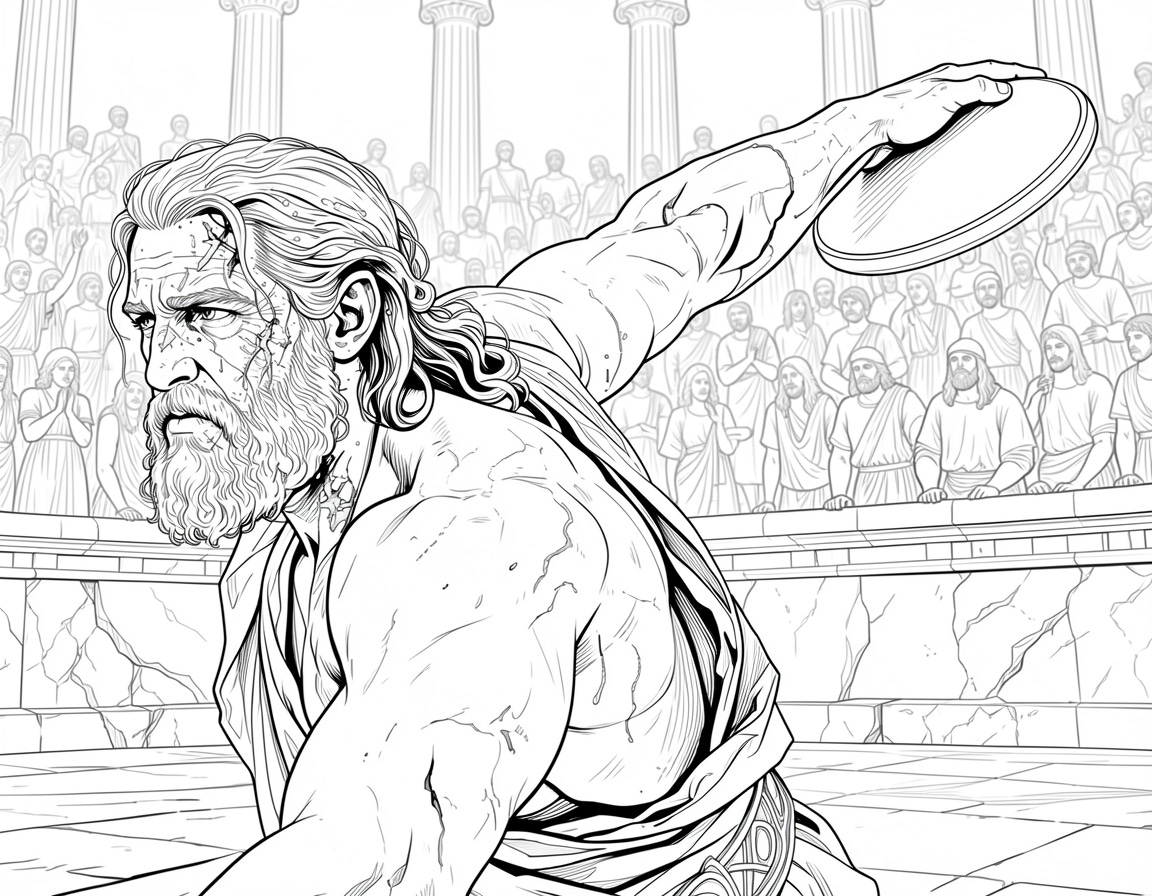
Odysseus rose angry
 and aimed the great stone.
He flung the disc fast
 far through the heavens.
Flew the fierce cast
 further than all;
beating the best,
 the boast of the proud.
Softly bard sang
 of secret lovers:
Aphrodite and Ares,
 alloyed in longing,
bound in the bed
 by baleful Hephaestus.
Laughter rang loud
 through lofty Olympus.

Gifts they granted him,
 gold and raiment;
Euryalus, eager,
 offered a sword:
"Forgive me, friend
 for folly spoken!"
Then warm were the waters
 where went he to bathe.

Glowing was the gaze
 of great beauty Nausicaa:
"Remember me, rover,
 who returned you your life."
Back to the banquet
 he bade the singer
to tell of Troy
 taken at last.

Demodocus duly
 the doom unfolded:
how Hellas' heroes
 the hold burst open,
biding then breaking
 from belly of horse.
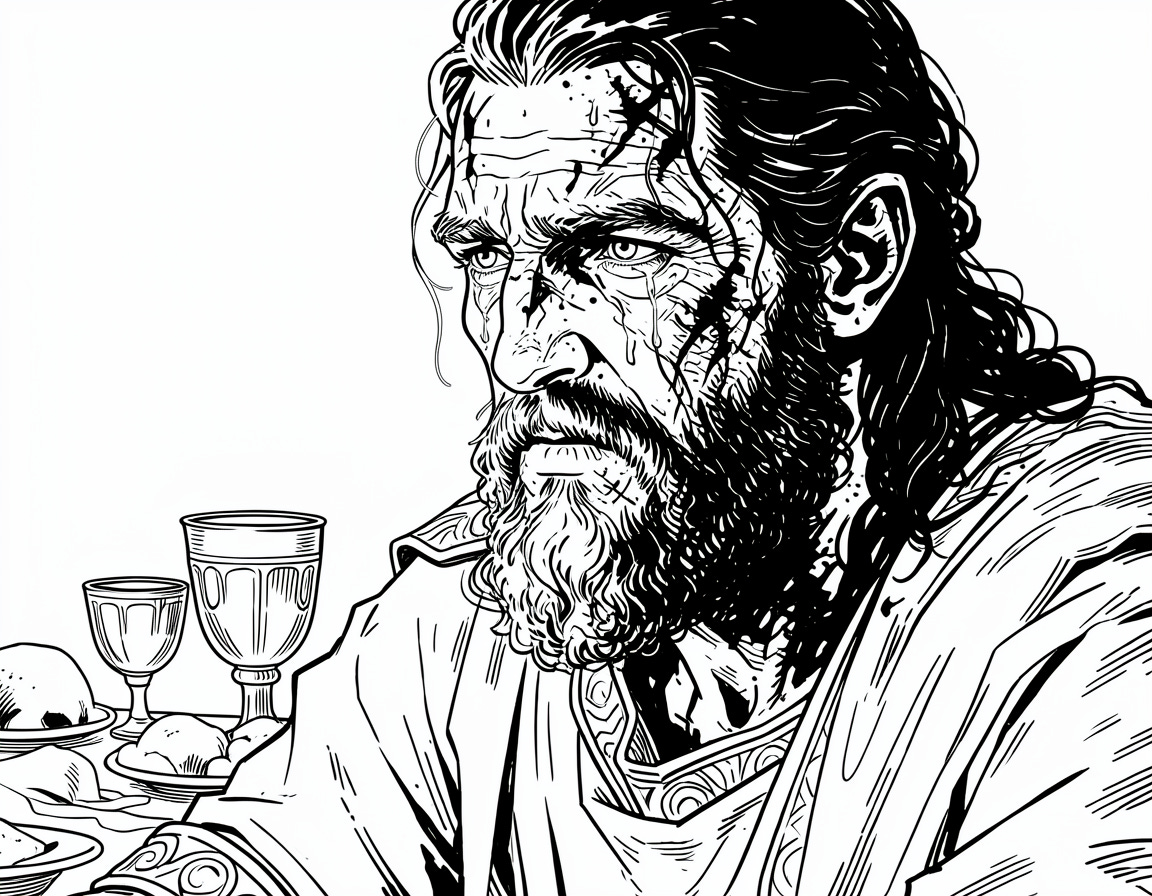
Wept now, the wise one,
 his woe renewing.
Alcinous asked
 as ended the song:
"Now tell us your title,
 far-travelled stranger.
From what fair isle
 afar do you come
to weep and wail
 of war in Troy?"

Book 8 Synopsis
King Alcinous calls a feast before sending Odysseus on his way in a ship. His bard sings of the quarrel between Achilles and Odysseus at Troy, causing Odysseus to weep. Odysseus hides this mostly successfully, but is observed by Alcinous, who stops the song and calls for athletic games.
Odysseus does not participate until Euryalus taunts him, suggesting he is a mere trader, not a strong warrior. Odysseus responds by taking a stone discus and hurling it far further than any other man, to the astonishment of the crowd and chagrin of Euryalus.
Odysseus is given gifts and bathed. At the bath, Nausicaa asks him to remember her for saving him, and Odysseus promises to remember her and give her thanks every day, as he does with the gods themselves.
Returning to the banquet, Odysseus asks the bard Demodocus to sing of the Trojan Horse and the fall of Troy. During the song Odysseus cannot contain his grief and starts openly weeping. As the song ends, Alcinous asks him for his story, including his name, island, parentage, and history, and why he weeps at the song of Troy.
This is a very atmospheric chapter. We learn about Greek games, such as stone discus, wrestling, and racing, and hospitality customs such as feasting and bathing. Homer uses the crying-upon-hearing-of-oneself device again, as he’s previously used it with Telemachus, to bridge from the Trojan Horse into Odysseus’ post-Troy story in the books to come. For me, the most memorable part of it is Odysseus’ gratitude to Nausicaa, but then, I’m a fan of her. Perhaps I should given her a third illustration! What do you think?
You're right to focus on Nausikaa. We're meant to see her as the image of a goddess. You're doing a great job. And viking saga style works well for the Odyssey, I think.
This was great! Fresh out of seeing Nolan's film these were great to read.